Why coffee grows around Da Lat
Most of Vietnam's coffee is robusta, grown in the warmer, lower parts of the Central Highlands. Arabica needs altitude and cool nights, and the Lang Biang plateau around Da Lat — about 1,500 metres above sea level — has both. Coffee was introduced to the area during the French period, and today arabica is grown on small family plots and larger farms on the hills around the city, often next to pine forest, tea and vegetables. Lower down in Lam Dong province, around Di Linh and Bao Loc, the farms are mostly robusta.
Where to see coffee farms
- Cau Dat (east, about 20–25 km): the best-known arabica area near Da Lat, around Xuan Truong and Tram Hanh, on the same road as the famous tea hills. Several farms here welcome visitors with a café and a view over the slopes, and you can combine them with the Cau Dat tea hills.
- Lac Duong and the foot of Lang Biang (north, about 12–15 km): coffee is grown here by many local families, including K'Ho households, on the slopes around the villages. Some small farms sell their own roasted beans.
- The hills around the city: on the edges of Da Lat — towards Trai Mat and on the roads out of town — you will pass small coffee plots between flower greenhouses and vegetable gardens.
When to go
Coffee is interesting all year, but each season shows something different. Arabica around Da Lat usually ripens towards the end of the year, roughly from about October into the first months of the new year: the branches are full of red cherries and you may see picking and drying. Coffee flowers are white and fragrant and usually appear in the early dry season after the harvest. In the rainy months (about May to October) the plants are green and the cherries still small. Mornings are always the best time — clearer views and cooler air.
What a farm visit looks like
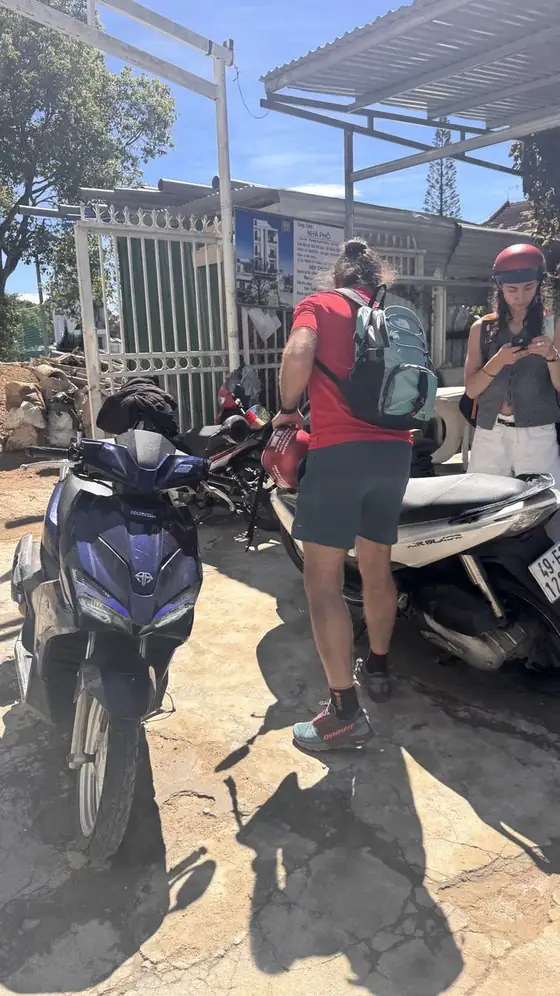
A typical visit is simple: you walk between the coffee rows, see the cherries on the branches, learn how the beans are picked, dried and roasted, and finish with a cup made from the farm's own beans. Many visitor farms have a small shop selling roasted beans or ground coffee — a good souvenir (see our guide on what to buy in Da Lat). Some places also show civets for "weasel coffee"; if animal welfare matters to you, ask how the animals are kept, or simply choose a farm without them.
Visiting respectfully
- Most coffee plots are private family land. Only walk in where there is a sign for visitors or where you are invited.
- Don't pick cherries or branches — they are the family's income.
- During the harvest, people are busy: keep the visit short and ask before taking photos of workers.
- Buying a bag of beans or a drink is a simple way to say thank you.
Riding there
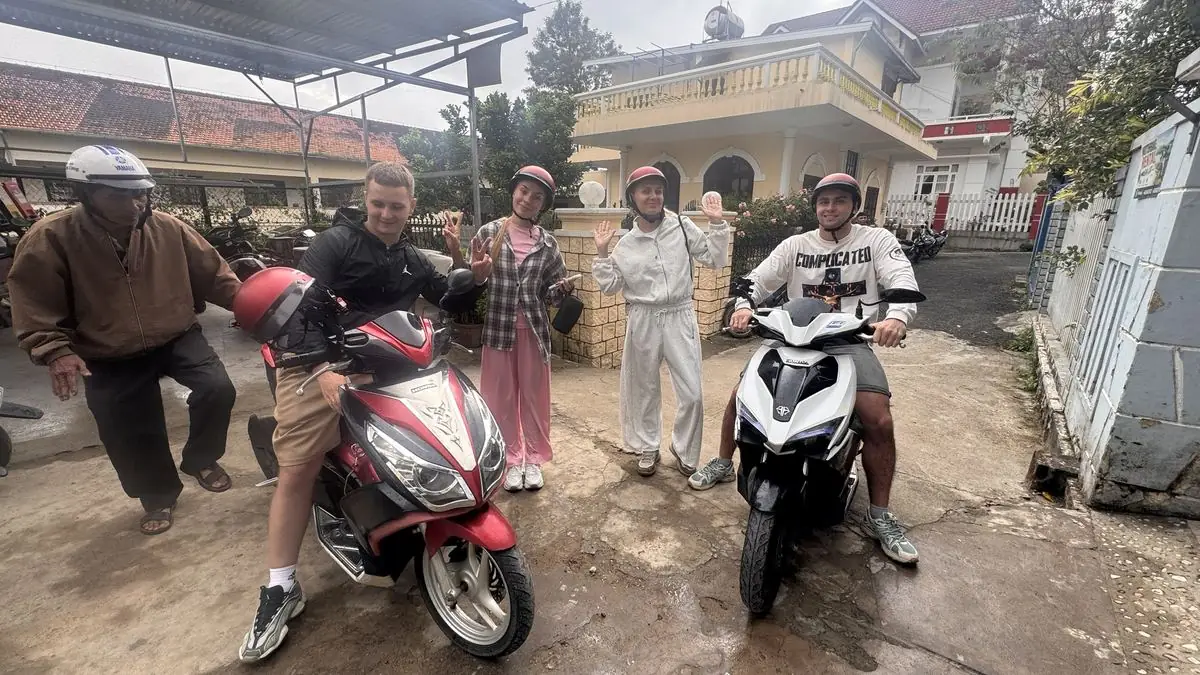
Cau Dat and Lac Duong are country rides with slopes and some narrow lanes. A Honda Air Blade 125cc is the comfortable choice, especially for two people; the electric scooter is better kept for the city. Fill up in Da Lat before leaving, bring a warm jacket for the morning and a light raincoat in the rainy season, and download an offline map — farm lanes are not always well marked. You can pair coffee with strawberry farms and local produce on the same day. No alcohol when riding, and strictly follow Vietnamese traffic law.
Rent a bike for the coffee trail
At Văn Phú you can rent a Honda Air Blade or Vision for 150,000 VND per day, with a free helmet, a phone holder and 1 liter of fuel included, and no cash deposit — just leave your passport or ID card. We open at 4:30 in the morning, so you can reach the coffee hills in the best light. See our motorbike routes to plan the day.

Written by Ngô Văn Phú (Phu) – owner of Van Phu Dalat, local travel services in Da Lat since 2018: motorbike rental, homestay and villa booking. About me →
Questions about Da Lat?
We'll help with routes, weather and booking a bike — just message us on WhatsApp.
Message on WhatsAppMotorbike rental in Da Lat
Honda Vision, Honda Air Blade 125cc and electric scooters — 150,000 VND per day, no cash deposit, helmet included, hotel delivery for 2+ days.